


- Cylindrical Lenses
- Aspheric Lenses
- Achromatic Lenses
- Spherical Lenses
- Optical Prisms
- Optical Mirrors
- Beamsplitters
- Optical Windows
- Infrared Optics
- Micro Optics
- Optical Filters
- Colored Glass Filters
- Custom Shapes
- Laser Optics
- Freeform Optics
- Fresnel Lenses
- Light Pipe Homogenizing Rods
- TIR Lens
- Medical Device Optics
Microlens Arrays & Custom Lenslet Arrays
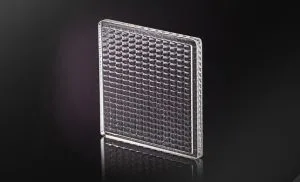
Shanghai Optics designs and manufactures custom microlens arrays and lenslet arrays for imaging, illumination, laser, beam shaping and OEM optical systems. We support 1D and 2D arrays with circular, square, hexagonal and custom lens geometries, with specifications tailored around lens pitch, focal length, array dimensions, substrate material, wavelength range and coating requirements.
Our engineering and manufacturing capabilities support projects from custom design and prototype evaluation through precision fabrication, optical coating and repeat OEM production.
Custom Microlens Array Capabilities
Shanghai Optics manufactures custom microlens arrays around system-level optical and mechanical requirements. Available capabilities include:
- Array configuration: 1D and 2D lenslet arrays
- Lens geometry: circular, square, hexagonal and custom geometries
- Optical parameters: custom pitch, focal length and lens profile
- Array dimensions: standard and application-specific sizes
- Materials: fused silica, optical glass and other materials based on spectral and system requirements
- Spectral range: configurations for UV, visible and NIR systems
- Coatings: AR and custom optical coatings
- Production: prototype development through repeat OEM manufacturing
- Engineering support: design review, manufacturability assessment and optical specification support
Materials & Spectral Range
Fused silica microlens arrays are available for applications from 193 nm to 2.5 μm, supporting UV, visible and NIR optical systems.
For designs where material dispersion is critical, fused silica has a refractive index of approximately 1.561 at 248 nm and 1.444 at 1550 nm.
Other optical materials can be evaluated based on the required wavelength range, optical performance, environmental conditions and manufacturing requirements.
Microlens Array Design Considerations
Microlens array performance depends on the relationship between lens pitch, focal length, fill factor, lens geometry, substrate material, wavelength and incident beam characteristics. These parameters should be considered together when developing an array for a specific optical system.
Depending on the application, the design can be optimized for requirements such as beam uniformity, optical efficiency, spatial distribution, array alignment and system integration.
Shanghai Optics can manufacture microlens arrays with fill factors up to 98% for applicable designs. Final achievable specifications depend on lens geometry, pitch, array dimensions, material and manufacturing requirements.
For custom systems, our engineering team can review the optical function and system requirements to determine an appropriate and manufacturable array configuration.
Microlens Array Configurations
Shanghai Optics supports multiple microlens array configurations based on optical function, geometry and system integration requirements.
Refractive Microlens Arrays: Custom refractive microlens arrays can be manufactured with application-specific lens pitch, focal length, surface profile, substrate material, array dimensions and coatings for imaging, illumination and beam-shaping systems.
Square Microlens Arrays: Square microlens arrays are available for systems requiring high fill factor and controlled spatial distribution. Designs can support fill factors up to 98%, with custom pitch, focal length, array dimensions and optical coatings available according to system requirements.
Fly’s Eye Microlens Arrays: Fly’s eye microlens arrays can be developed for beam homogenization and illumination systems with square or rectangular array geometries, spherical or anamorphic lens profiles, custom channel configurations and application-specific pitch and focal length. Typical integration areas include laser illumination, projection optics, semiconductor equipment, microscopy and medical optical systems.
Diffractive Microlens Arrays: Custom diffractive microlens arrays can be developed for applications requiring controlled beam distribution or beam splitting. Design parameters can be tailored around wavelength, diffraction requirements, array geometry and system-level optical requirements.
Custom Microlens Array for UV, VIS & NIR Imaging
Shanghai Optics developed a custom 11 × 11 microlens array with a 3000 μm pitch and compact 7 mm × 8 mm dimensions for a UV, visible and NIR video imaging system.The array was developed around the imaging system’s spectral and spatial requirements, demonstrating how lens pitch, array geometry and overall dimensions can be tailored to application-specific optical requirements.Read the Full UV, VIS and NIR Microlens Array Case Study→
Microlens Array Manufacturing & Quality Control
Shanghai Optics supports precision microlens array fabrication using photolithographic and semiconductor-processing techniques, with manufacturing processes selected according to lens geometry, pitch, material, array dimensions and production requirements.
Manufacturing and inspection capabilities include:
- Photolithographic processing
- Precision surface profiling
- Lenslet geometry and pitch control
- Array alignment and dimensional inspection
- Optical coating
- Interferometric and optical testing
- Prototype and repeat-production quality control
Inspection requirements can be defined according to the application and drawing specifications. For custom programs, our engineering team can review achievable tolerances and inspection requirements before production.
Factory Standard Specifications
| Parameter | Specification |
| Diameter | +0, -0.1 mm |
| Surface Accuracy | λ/2 @ 633 nm or better |
| Thickness | ±0.2 mm |
| Centration | ±0.04 mm |
| Surface Quality | 20-10 |
| Bevel | 0.2 mm typical |
| Materials | SK2, BK7, Fused Silica and more |
Specifications vary with lenslet geometry, pitch, array size, material and optical requirements. Contact our engineering team to review manufacturing limits for your design.
Specifying a Custom Microlens Array
For an engineering review or quotation, provide the available optical and mechanical requirements for your system, including:- Array configuration and lenslet geometry
- Lens pitch
- Focal length
- Array dimensions
- Clear aperture or active area
- Operating wavelength or spectral range
- Substrate material
- Surface profile
- Fill-factor requirement, if applicable
- Optical coating requirements
- Incident beam parameters or intended optical function
- Mechanical and alignment constraints
- Environmental requirements
- Prototype and production quantities
Submit Your Microlens Array Requirements →
Frequently Asked Questions
Key inputs typically include lenslet geometry, pitch, focal length, array dimensions, clear aperture, wavelength range, substrate material, surface profile, fill factor and coating requirements. For beam-shaping or illumination systems, incident beam characteristics and target output distribution should also be provided. Mechanical constraints, environmental requirements and production quantity should be included where applicable.
Pitch and focal length should be defined in relation to the beam geometry, required spatial distribution, numerical aperture, array dimensions and downstream optical architecture. These parameters should be evaluated together because changing pitch or focal length can affect fill factor, beam overlap, packaging and system-level performance.
Achievable fill factor depends on lenslet geometry, pitch, surface profile, array layout and manufacturing process. Shanghai Optics can support fill factors up to 98% for applicable designs, but the achievable value should be reviewed against the complete optical and manufacturing specification.
Yes. Material, lens geometry and optical coating can be selected around the required spectral range. Fused silica is available for UV, visible and NIR applications, while other optical materials can be evaluated according to wavelength, environmental and system requirements.
Yes. For beam-homogenization systems, the array can be developed around parameters such as input beam size and profile, wavelength, required output distribution, working distance, lenslet pitch, focal length and array geometry. Fly’s eye and other lenslet-array configurations can be evaluated according to the optical architecture.
Tolerance requirements depend on how the array integrates with the complete optical system. Relevant parameters may include lenslet pitch accuracy, focal-length tolerance, surface profile, array dimensions, centration or registration, surface quality, substrate thickness and coating performance. Critical tolerances should be derived from the system error budget rather than specified independently where possible.
Yes. Shanghai Optics supports custom microlens array development from engineering review and prototype fabrication through inspection and repeat OEM production. Prototype builds can be used to validate optical performance, dimensional requirements and manufacturability before production quantities are established.
Provide the available optical drawing or array specification, lenslet geometry, pitch, focal length, array dimensions, wavelength range, substrate, coating requirements, optical tolerances and quantity. For application-specific designs, include the intended optical function, relevant beam or imaging parameters, mechanical constraints and environmental requirements.
Need a Custom Microlens Array for Your Optical System?
Developing a microlens array for an imaging, illumination, laser or OEM optical system? Shanghai Optics can review your lens pitch, focal length, geometry, wavelength, substrate, coating and integration requirements and assess a manufacturable solution from prototype through repeat production.Contact Us to Discuss Your Requirements→
Need help?
We offer consultations and initial feasibility studies. If you have questions about limitations or lens capabilities we’re more than happy to work through your proposed custom components. As an unmatched custom optical provider, we’ll do everything that we can bring your vision to life.


