

Telecentric Lens Design & Application – Part 1
What Are Telecentric Lenses?
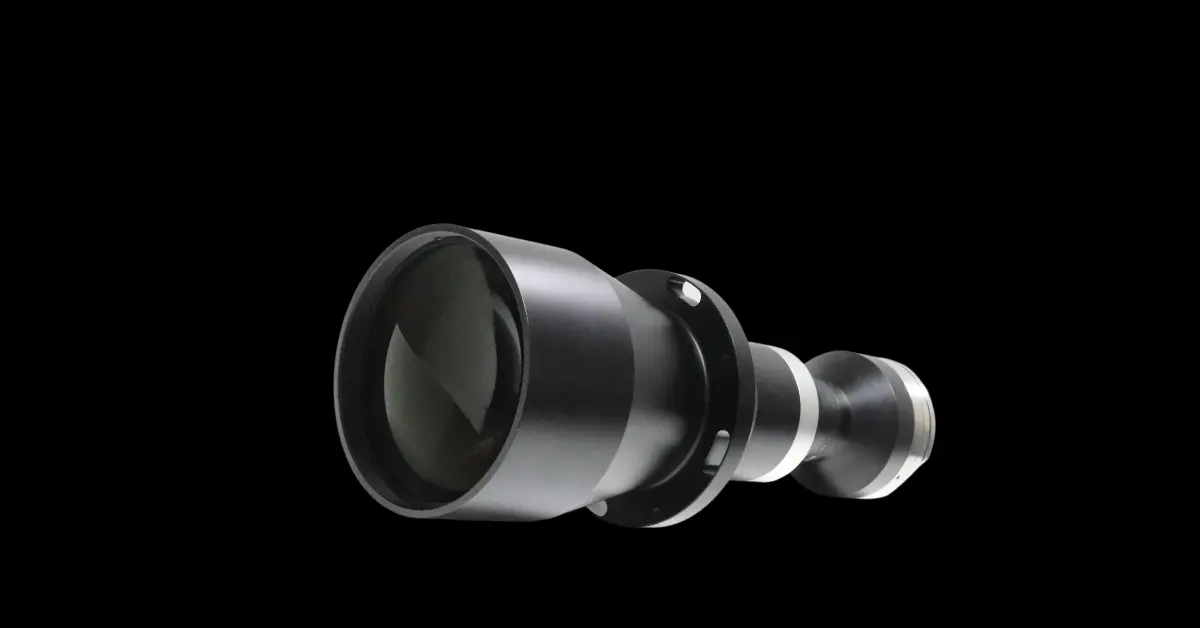
Telecentric lenses, a specialized type of optical lens, possess the unique characteristic of setting either their entrance or exit pupil to infinity. They hold significant importance in industrial applications that demand exceptional precision in two-dimensional measurements. Telecentric lenses excel in capturing objects without size distortion caused by varying light angles or image magnification. What defines a lens as telecentric is its capacity to create an orthographic image through an entrance or exit pupil positioned at an infinite or unlimited distance. In contrast to standard lenses, which often introduce parallax or perspective errors due to their defined focal length, telecentric lenses consistently offer a precise representation of the object.
Telecentric Lens Types
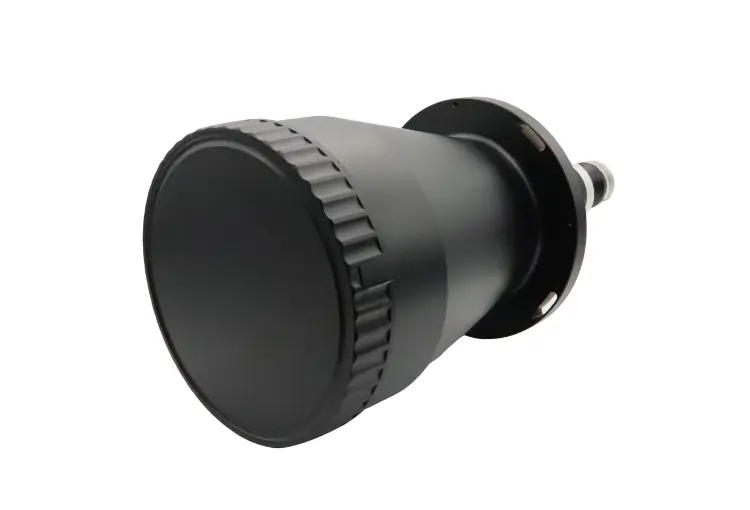
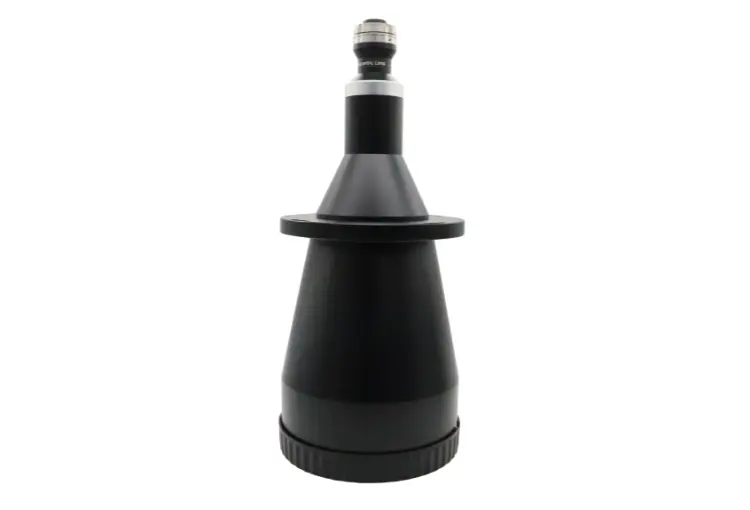
In order to attain telecentricity, it is essential to meticulously place a suitable aperture within either the entrance, exit, or both portions of the lens. It is important to emphasize that the classification of telecentric lenses is determined by the configuration of this aperture.
Object-Space Telecentric Lenses
An object-space telecentric lens achieves its telecentricity by configuring its entrance pupil at infinity using a suitable aperture. This specific design feature enables the lens to create orthographic projections of objects it captures. These lenses are characterized by a fixed working distance, meaning that objects situated within this predefined range will appear sharp and well-focused, while those located beyond this distance will exhibit blurriness.
The key advantage of object-space telecentric lenses lies in their ability to maintain a consistent object size, irrespective of the object’s varying distances from the lens. However, they are generally larger and more costly compared to other telecentric lens varieties. The larger size requirement is driven by the need for the lens to accommodate the largest object it intends to image, resulting in a more complex construction with multiple components.
One notable application of object-space telecentric lenses is in microscopy. Unlike conventional microscope objective lenses, which are commonly used to magnify and image subjects using a high-powered magnifying glass and a short focal length, object-space telecentric lenses offer a unique solution. These lenses allow for adjustable working distances through a focus ring, enabling changes in magnification. Nevertheless, this flexibility comes at the trade-off of a slight reduction in telecentricity.
Image-Space Telecentric Lenses
An image-space telecentric lens achieves infinity exit pupil positioning through a suitable aperture. This setup ensures that images remain the same size, irrespective of the object’s distance from the image sensor.
These image-space telecentric lenses find valuable applications in scenarios where sensitivity to the angle of incidence is crucial, requiring precise focus not only at the center but also across the image’s periphery. One example is the use of image sensors with microlens arrays, such as those commonly found in digital cameras.
Bi-Telecentric Lenses
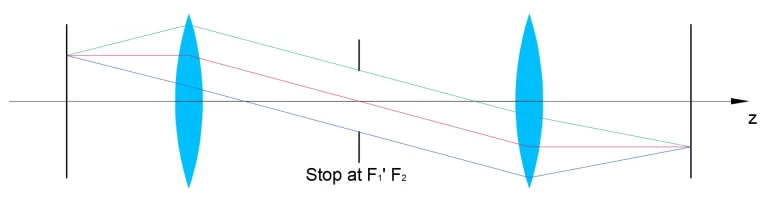
A bi-telecentric lens achieves infinity positioning for both its entrance and exit pupils by employing two suitable apertures at each end. This telecentric configuration enables significantly more precise measurements compared to mono-telecentric lenses.
These bi-telecentric lenses exhibit a natural afocal nature due to the collimation of the object’s image, created by the first appropriate aperture and further refined by the second appropriate aperture. Applications of these bi-telecentric lenses extend to fields such as optical lithography, where light is harnessed for creating ultra-thin patterns on materials like silicon wafers.
Telecentric Lens Design
The aim of telecentric lens design is to mitigate the magnification differences arising from variations in the distance between the lens and the object being measured. It’s worth emphasizing that different types of telecentric lenses demand unique design considerations to achieve this goal.
Choose the Right Telecentric Lens Design
How to choose the right telecentric lens design? First of all, the lens-compatible CCD size should be equal to or larger than the camera sensor size; Secondly, calculate the mag when the object size and camera sensor size are confirmed, always choose a smaller mag if no existing suitable mag so as to cover all the object area. Finally, check the WD & lens size to make sure it can fit in the whole system’s design. Pay attention to other requirements like distortion, or DOF if necessary.
Object Space Telecentric Light Path: The point of convergence for the chief ray in the object space, running parallel to the optical axis, is positioned at an infinite distance from the image space, giving rise to what is known as the object space telecentric light path. Its primary purpose is to correct any errors in readings resulting from inaccurate object focusing.
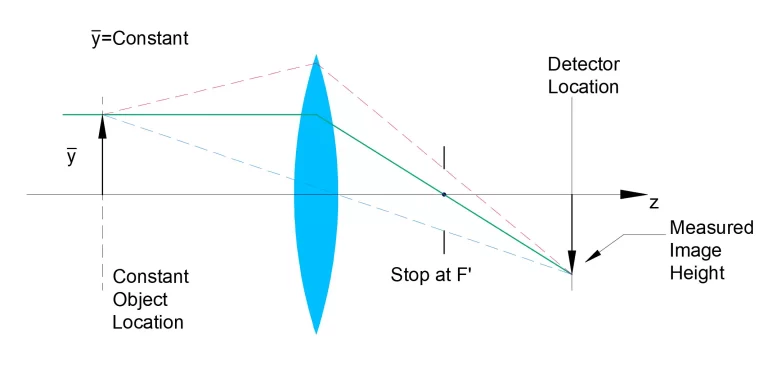
Image-Side Telecentric Light Path: Conversely, the converging center of the chief ray on the image side, parallel to the optical axis, is also situated infinitely far from the object, constituting the image-side telecentric light path. This design serves to rectify measurement inaccuracies originating from improper focusing on the image side.
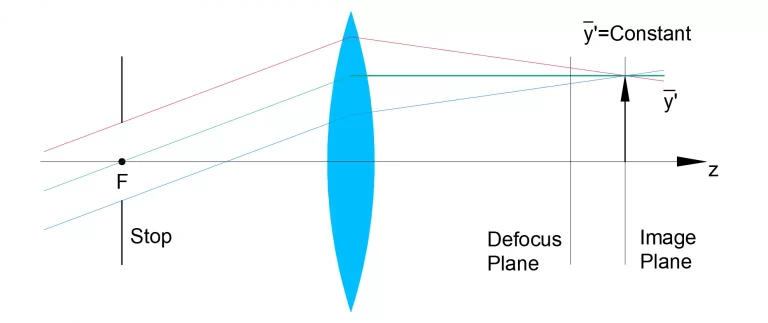
Bi-Telecentric Light Path: In the realm of vision measurement and detection, a dual-purpose telecentric optical path, encompassing both object and image spaces, is employed. This design integrates the functions of object space and image space telecentricity, and it is primarily utilized in this field. The bi-telecentric lens, also known as a double telecentric lens, adopts this dual principle for its operation.
Selecting the Appropriate Telecentric Lens Design
When choosing the right telecentric lens design, several critical factors should be considered:
- CCD Size Compatibility: Ensure that the lens-compatible CCD size is equal to or larger than the camera sensor size to guarantee a proper fit.
- Magnification Calculation: Once the object size and camera sensor size are confirmed, calculate the required magnification. If an exact match isn’t available, opt for a smaller magnification to ensure full coverage of the object area.
- Working Distance (WD) and Lens Size: Verify that the working distance (WD) and the physical size of the lens align with the overall system’s design to guarantee proper integration.
- Additional Considerations: Pay close attention to other specific requirements such as distortion or depth of field (DOF) as needed to meet the system’s objectives effectively.
At Shanghai Optics, our expertise lies in providing top-quality custom telecentric lenses. Explore our range of custom telecentric lenses solutions and place your order today. For any inquiries, please feel free to contact us, and we’ll be delighted to assist you.


